

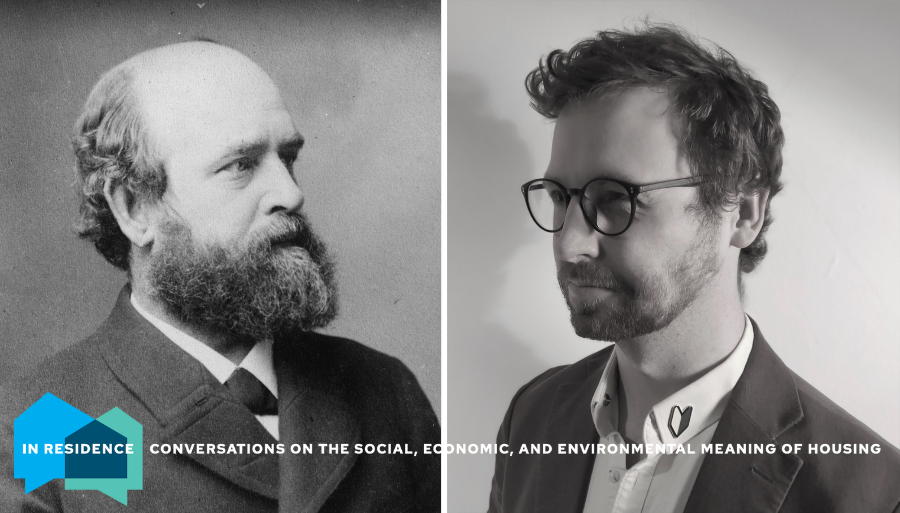
Why is there such poverty amid such wealth? Inequitable land ownership and ineffective taxation, according to American economist Henry George (1839-1897). His solution? A tax that would capture rising land value and use it for public benefit. As we find ourselves in another Gilded Age, perhaps it’s time to look to land and Georgism for answers to our housing crisis and rising inequality.
This talk is for policy wonks, armchair philosophers, community activists, and anyone curious about the power of land to solve our most urgent problems. Economist Stephen Hoskins will examine George’s potent antidote to land speculation and the concentration of wealth, its successful application in places as diverse as Pennsylvania and Singapore, and what it could mean for Bainbridge Island.
Stephen Hoskins is an urban economist with international experience in housing, transportation, and environmental policy. He has consulted on municipal policy in his home country of New Zealand, researched retirement economics in Singapore, and earned a master’s in spatial economics from Vrije Universiteit Amsterdam, before moving to Bainbridge Island. For the past 15 years, Stephen has been driven by a single question: why is housing affordability so broken, what social harms result, and how can we fix it? That focus has led him to housing advocacy, a deep interest in the ideas of Henry George, and his current work with the Progress & Poverty Institute, where he advises local governments on how Georgist ideas can guide housing and tax policies that support inclusive, affordable, and thriving communities.
Henry George (1839-1897) was an American economist, social critic, and author of Progress and Poverty, at one time the second-best selling book in America after the Bible.