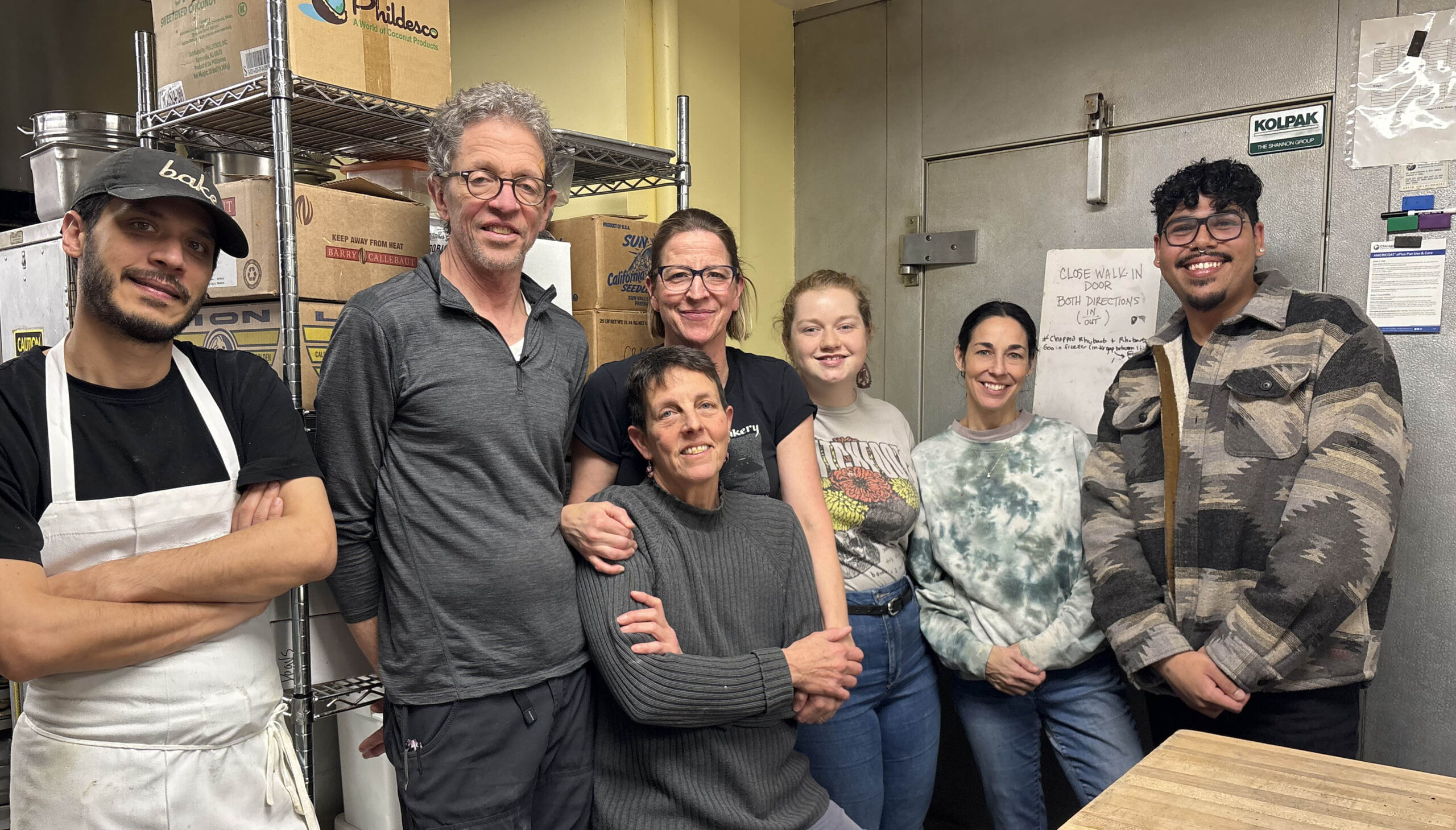
Twenty of the 24 staff at Blackbird Bakery commute from off island, motivated by the opportunity to bake and to be part of a vibrant and supportive workplace where diversity and collaboration are celebrated. But what if they could live here too? What would that mean for the business—and for Bainbridge as a whole?
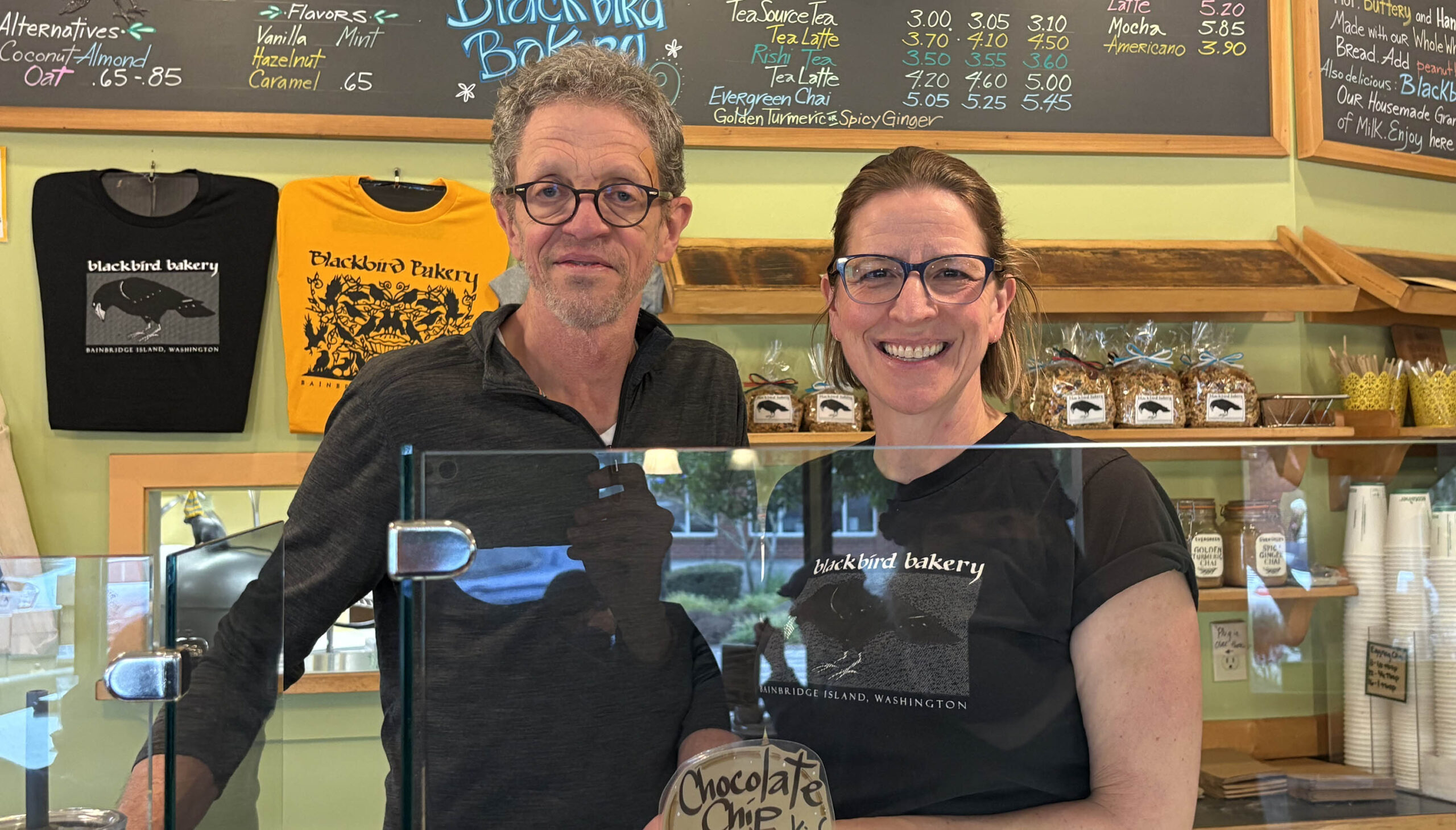
After a quarter century of baking on Winslow Way, Heidi Umphenour and Jeff Shepherd, the owners of Blackbird Bakery, have been witnesses to change. Some of it, touchingly human. The children who once pressed their faces and hands against the pastry case to taste with their eyes are now grown with children of their own, who do just the same. And some of it, heartless economics, which threaten to erode the community Jeff and Heidi have cultivated in the kitchen and with their customers.
When the two moved to the island in 1995 to work at Bainbridge Bakers, they spent their days shoulder to shoulder with other creatives, not just bakers but artists and actors, who lived on Bainbridge. Their hodgepodge of affordable homes is long gone—the old leases expired, the tiny homes converted to short-term rentals—taking with them their former inhabitants whose incomes were no match for the rising cost of housing.
Safeway, Town & Country, the post office… “I’m pretty sure the vast majority of those people do not live here,” Jeff surmises. “You want the people who are bagging your groceries, recommending books at the bookstore to you, selling you clothes in Winslow. You want those people to be part of this community. And if the economics of the housing market are such that they can’t afford to live here, it becomes very much an us and them. We live here, they serve us… And us becomes what? People at a certain income level.”
That kind of division is antithetical to Jeff and Heidi, to both their business model and personal ethic. “The way that we set up Blackbird, it’s a microcosm of the way we would want the world to be,” says Heidi. They created a supportive and respectful work environment that attends to employees’ mental and physical health, and they’ve fostered collaboration with regional farmers and artisans and most of all, their workers. The result is a vibrant and organic mix of influences and ideas and a sense of ownership and belonging among staff.
That spirit of collaboration and community drives the development of each baked good: Staff decide on an item; Jeff or Heidi might introduce a recipe and do a test bake for the others to taste and tweak; then a second test bake by a different baker, and one more round or even another, until it’s just right. In such a culture of inclusion and innovation, even established products evolve. This fall, sales of a certain gluten-free pumpkin muffin began to flag as the season wore on, inspiring a baker to top it with maple glaze and a sprinkle of salt and prompting someone else to suggest cutting the raisins.
You can tell a lot about a food business and its values when you look at the kitchen, says Heidi. Is it all men or all women? Are their queer folks and people of color in the mix? Multigenerational staff? Diverse representation contributes to the health and richness of a work environment. “We’re all working, and we’re creating delicious things to eat,” she says, “but we’re also talking to each other about our lives and politics… I have to say, I’m very thankful for that. To be able to hear a point of view that’s different than my own and to understand people’s lives and how they arrive at that point of view.”
But even the joy of communal baking cannot overcome those hard economic truths. That’s where health insurance, paid vacation, and subsidized parking for the staff come in. Just four of Blackbird’s 24-person staff live on the island, and each has some kind of special circumstance, perhaps a working spouse or a childhood bedroom, that makes it possible. Those that commute from more affordable towns contend with expensive, often grueling drives that can lead to burn-out. Blackbird has lost a few good staff this way. And then there are the folks they never even had the chance to hire, the ones who chose to deploy their talents closer to home.
If they don’t push back with incentives like these and an inviting work culture, then Blackbird will lose a little of what makes it so special. “You won’t get somebody who grew up somewhere where they’re bringing food elements and sensibilities, which really enliven our business and enliven our awareness of possibilities,” says Jeff. “The less you have of that, the more it all sort of starts becoming the same.”
And if the city doesn’t push back with the facilitation of affordable housing, then Bainbridge will lose yet more of its diversity. In a country where a legacy of housing discrimination has bound together race and class, where the treatment of immigrants often means low wages, and where young people face financial obstacles that far exceed their parents’, the lack of affordable housing will screen out people of all cultures, incomes, races, and ages.
Like their community and customers, Jeff and Heidi are also growing and changing. Their youngest will head off to college next fall, and after years of deep involvement with the schools, they find themselves looking for a new way to care for their community outside the bakery. They’ve decided to take a more public stand in support of affordable housing. Some of that will involve formal actions, like delivering public comment at City Hall, which Jeff recently did for the first time, or conferring with other business owners. But a good part of it will likely take place sitting on a bench outside the bakery or standing at an intersection, where impromptu conversation among community members offers an opportunity to share perspectives and concerns, much like what they experience at the bakery. In this way, they hope to convey the direct importance of affordable housing to everyone—regardless of where or how they live.