A new memory café brings together those experiencing memory loss and their care partners for community, diversion, and a few good laughs.
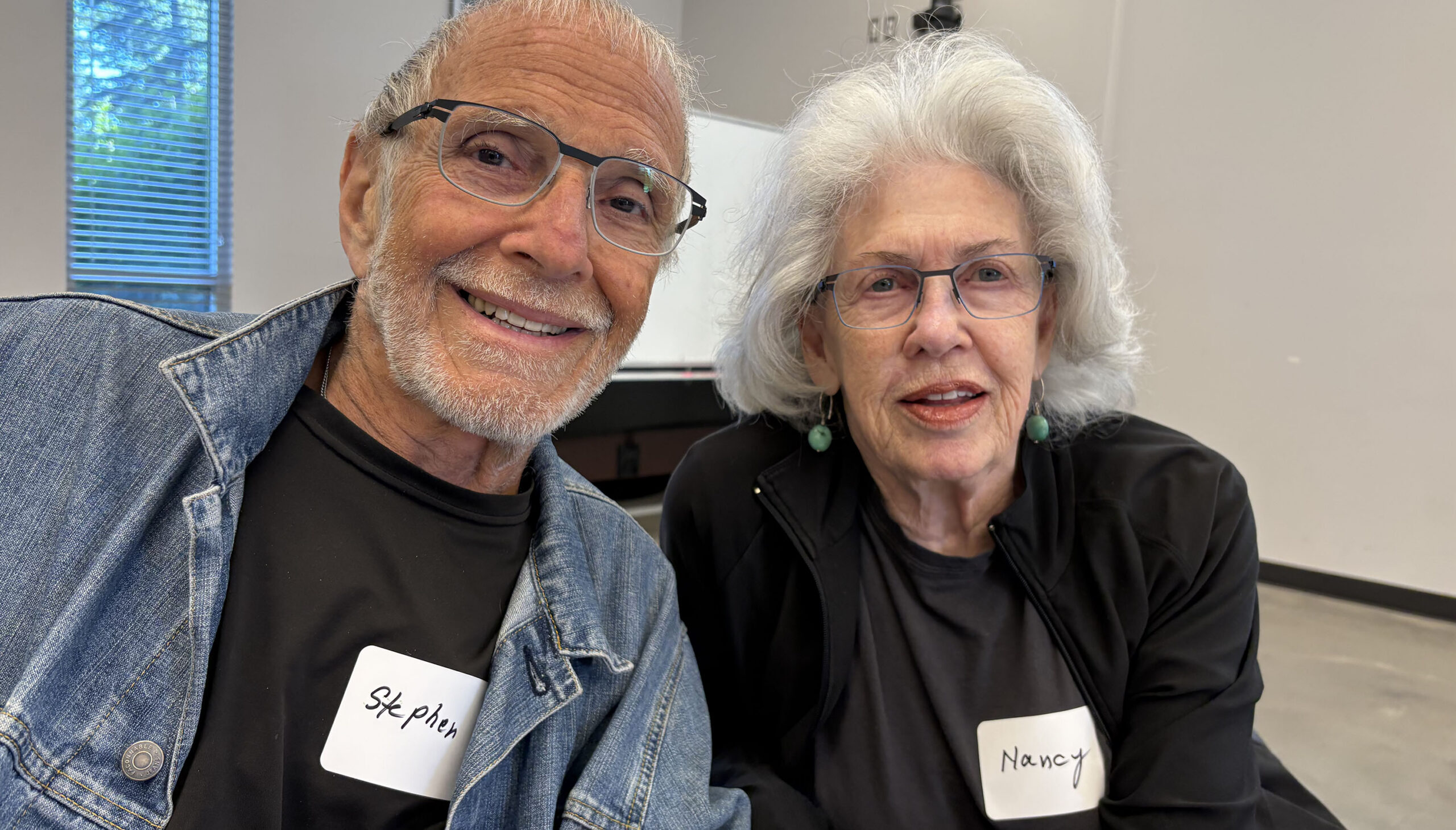
“I’m here because she needs help,” said the guy with memory loss, who hasn’t lost his sense of humor, pointing to the woman seated beside him. Stephen and his wife Nancy, both of whom haven’t lost their New York accents, arrived on Bainbridge Island in the early 1990s. He’s an architectural photographer, whose work is represented in the Seattle Art Museum collection. They came to the June 12th Memory Café, like everyone else that morning, seeking out the company of those in the know about memory loss because they are experiencing it themselves, like Stephen, or caring for someone who is, like Nancy. It’s a club that no one wants to join. But once you’re in, it can be a great comfort, and in the case of this morning’s café, great fun, to meet your fellow members.
The Bainbridge Island Memory Café is a project of HRB, Island Volunteer Caregivers, Bainbridge Island Senior Community Center, Bloedel Reserve, and Aubin Aphasia Speech & Language Center. Today’s café was the second in what will be a monthly series. The first two were held at the fire station on Madison Avenue, the inaugural cafe featuring live music with Carl Westphal and Paul Connor and the second featuring an art project with local artists, Cynthia Herrick and Meredith Patterson. Next month’s will be hosted by Bloedel and will reprise the musical duo but transport them, and all our guests, to the Residence living room with its water view and garden splendor.
These cafes are open to anyone with memory loss, no matter the underlying condition or stage of disease. It is not a drop-off program but rather an occasion for care partners, which can include spouses, children, friends or professional caregivers, and people with memory loss to enjoy one another’s company and connect with others contending with similar challenges.
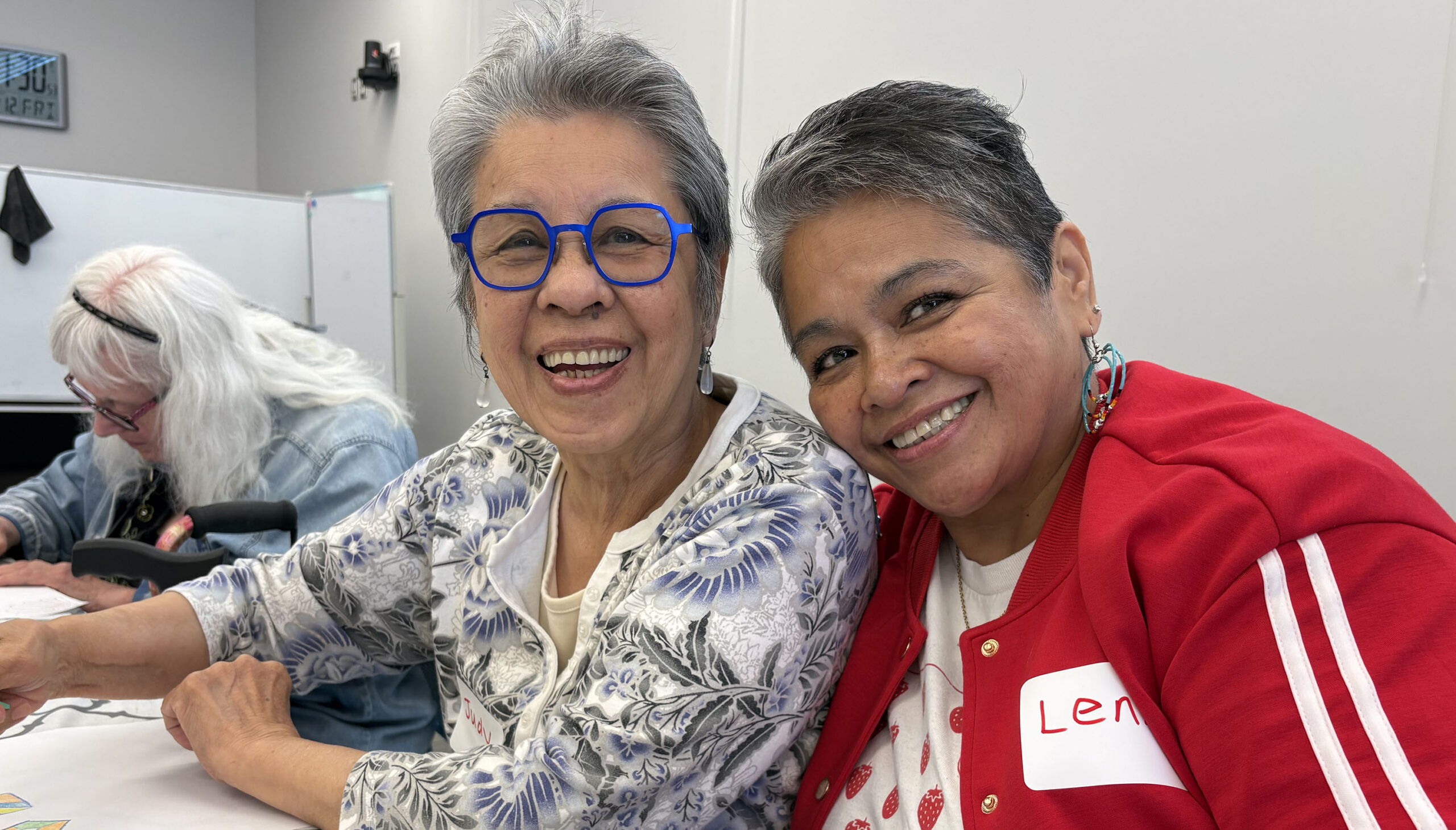
 Lena, who attended with her mother Judy, works at the senior center, but her role today, she told the group, was “to spend wonderful time with her mother.” In 2020, Judy suffered a ministroke, which necessitated speech therapy. Lena couples the medical care with outings like the memory café and activities at the senior center, to keep Judy “healthy across the board, in brain and body.” The two share a multigenerational home with Lena’s husband and son, a cultural norm in their Indipino community. The family has experienced many losses recently, with Lena’s grandmother passing just two weeks ago at the age of 99, underscoring her already steadfast and profound appreciation for the here and now and every moment with those she loves. “This is where my heart is. I love spending time with her,” Lena said of her mother.
The final introduction was Paul’s. “We’ve been married for 58 years, and she still eats my cooking…Phyllis,” he said looking lovingly at his sidekick, “is going to show me how to draw.” Humor clearly has a way of catching on. But in spite of its power and uplift, humor cannot stave off the pain of memory loss. Paul described the alienation they experienced recently at the grocery store, when a chatty cashier didn’t understand why Phyllis was not responding to her overtures the way other customers did. The couple didn’t come for the art, said Paul. They came for community and a place where you don’t have to be “overprotective.” “It is so nice to be able to go somewhere just for fun,” Paul later shared. “New faces, new surroundings are all nice.”
To learn more about this series, connect with Misty Mountford, HRB’s Independent Living at Home program director and a Dementia Champion with Washington Dementia Friends ([email protected] or 208-842-1909, ext. 18).